The BC Healthy Connections Project (BCHCP) today officially launched Phase II of its scientific evaluation of the Nurse-Family Partnership program.
Developed by Dr. David Olds more than 30 years ago, Nurse-Family Partnership (NFP) involves nurses visiting disadvantaged young women — who are preparing to parent for the first time — in their homes, roughly twice a month. These home visits start during pregnancy and continue until children reach their second birthday.
The BCHCP is the first-ever Canadian evaluation of NFP to determine whether the program is more — or less — effective than existing services in BC. The goals of the NFP are to improve pregnancy and parenting outcomes and child health and development, while also helping mothers to become economically self-sufficient.
Until the scientific evaluation is completed NFP is available only through this project. Please see Referral Information, below.
Phase I of the BCHCP actually began more than 18 months ago when 52 public health nurses and 10 supervisors from across the province began their NFP education.
Then, starting in April 2012, these public health nurses began applying their new knowledge and skills by home-visiting more than 200 “guiding clients,” the name given to young women enrolled in the nurse education pilot. Phase I continues still, with public health nurses receiving further education and continuing to visit their guiding clients.
Today, these public health nurses are well prepared for Phase II — involving more than 1,000 mothers and children over the next five years. Using rigorous evaluation methods, half these women will be randomized to receive NFP while half will receive existing services. Child and maternal outcomes will then be compared when mothers and children “graduate” — when children reach their second birthday.
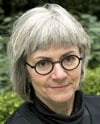
Susan Cumming, a public health nurse with more than 18 year’s experience with Interior Heath in Kamloops, BC, is keen, even though she was initially reluctant to join the BCHCP.
“When I first heard about the project I was ambiguous,” she says. “I wasn’t clear how it differed from the work I was already doing with high-needs families.” Eventually she attended an information workshop and was captivated by a video clip of NFP’s developer David Olds. “He talked about what the nurses did in the US and he quoted one of them saying something along the lines of, ‘it’s the hardest, most rewarding work I’ve ever done.’
“Something in me just tweaked,” Cumming recalls. “This has always been an area I’ve been passionate about.” Despite her vast experience as a public health nurse though, “the learning curve was straight up,” Cumming says — remembering when she first started the education pilot. “In all the years I’ve been a public health nurse, this is the most intense learning I’ve done.”
Cumming has worked with four families as part of Phase I, including 24-year-old Mary* (name has been changed to preserve privacy) who is now the mother of a six-month-old.
“We connected during the fourth month of pregnancy,” Cumming says. “She’s a great mom and a very motivated — very keen client.”
For Mary, in turn, the opportunity to receive one-on-one parenting support from a public health nurse has been “fantastic.”
Mary was recruited into Phase I at the maternity clinic in Kamloops and saw the benefits almost immediately. “It was a bit awkward at first because I’m a little shy,” she says. “But once we got talking I knew it would work out really well. She’s one of those people who’s really easy to talk to.”
Mary says that she’s had many interactions in her 11 months working with Cumming. Perhaps one of the most helpful was related to preparing for labour. “I couldn’t afford the private prenatal classes because they were $140,” she says. Although she did find one free program that was informative, it still didn’t answer all her questions. “I talked to Susan for about 45 minutes and she really helped walk me through all the steps of labour,” Mary says. “I was so much better prepared.”
In fact, Mary’s so impressed she’s encouraging her friends to consider contacting their local public health unit to see if they are eligible to participate in the BCHCP. (See Referral Information, below.)
Cumming also reports that the whole nurse education pilot experience has accelerated her own development as a public health nurse. She particularly appreciates the reflective practice —built into the NFP model — where she meets with her supervisor for one hour every week to discuss families, issues and concerns. “When I first heard about it, it seemed very unfamiliar,” she says. “Now I can honestly say I look forward to it every week because it’s very positive and empowering.”
Most of all, in working with all her guiding clients, Cumming feels that she’s making a difference. “Two of the five guiding principles of NFP are ‘follow the client’s hearts desire’ and ‘only a small change is necessary’.” This keeps her highly motivated to participate in the remainder of the BCHCP — to determine whether NFP can work for young women across BC.
The BCHCP is being funded by the BC Ministry of Health, with support from the BC Ministry of Children and Family Development and five participating BC Health Authorities. As well, funding is being provided by the Mowafaghian Foundation. Charlotte Waddell and Harriet MacMillan are the Nominated Co-Principal Investigators. Susan Jack and Debbie Sheehan are the Co-Principal Investigators. Nicole Catherine is the Scientific Director.
Referral Information
For the duration of the BCHCP recruitment, NFP is accessible only through this scientific evaluation. To be eligible to participate in the BCHCP, women must be: parenting for the first time; aged 24 years or younger; able to speak English; and less than 27 weeks gestation (ideally 10–24 weeks).
Referrals are not made directly to the study. Rather, women should be referred or should self-refer to their local public health unit where a public health nurse will screen them. The study will then be explained and eligibility to participate will be confirmed.