
Did You Know?

September brings focus to FASD awareness and suicide prevention
September 7, 2026Photo credit: Pexels
This week marks two significant awareness days, both grounded in prevention and community care.
Sept. 9 is International FASD Awareness Day. This annual event raises awareness of Fetal Alcohol Spectrum Disorder (FASD), advocating for better prevention, diagnosis and support for individuals with FASD. This year’s theme, “Everyone Plays a Part: It Takes a Community,” highlights the power of collective support. It also reframes healthy pregnancies as a shared responsibility, not just a matter of telling people not to drink. Notably, studies suggest that women facing significant adversities, such as poverty and lack of social supports, are at greater risk of using alcohol during pregnancy, underscoring the importance of community care. To learn more, see Vol. 5, No. 2 of the Children’s Mental Health Research Quarterly.
The following day, Sept. 10, is World Suicide Prevention Day. Organized by the International Association for Suicide Prevention and co-sponsored by the World Health Organization, the purpose of this day is to raise awareness around the globe that suicide can be prevented. This year marks the final year of the triennial theme “Changing the Narrative on Suicide,” which encourages open and honest conversations about suicide and suicidal behaviour while emphasizing the importance of connection and collaborative action. When it comes to children and youth, efforts to prevent suicide are strengthened by knowledge of risk and protective factors. To learn more about these factors, see Vol. 16, No. 4 and Vol. 17, No. 1 of the Children’s Mental Health Research Quarterly.

Childhood anxiety comes with significant financial costs
August 31, 2026Photo credit: Unsplash
The burdens of anxiety disorders go beyond those experienced by young people. Hardships often extend to family members. For example, parents may end up missing work and incurring costs for treatments that are not publicly funded. Society also pays a price, in the form of lost human potential, when childhood anxiety is not prevented or treated early. Collective fiscal expenses exist as well. For instance, a Dutch study found that annual per capita societal costs were approximately $6,500 (in 2024 CDN$) higher for children with anxiety disorders than for those without them when considering costs such as health care, special education and loss of paid work for parents.
For more information, see Vol. 18, No. 4 of the Children’s Mental Health Research Quarterly.

International Youth Day 2026 highlights young people’s common aspirations
August 10, 2026Photo credit: Pexels
Though young people around the world experience different day-to-day realities, they share common aspirations — and common challenges. That’s the message shared by United Nations (UN) for this year’s International Youth Day event.
Held annually on August 12, International Youth Day celebrates young people’s achievements and raises awareness of the challenges they face. The day positions youth as meaningful contributors and partners in the UN’s push to meet its sustainable development goals.
The 2026 theme, Different Contexts, Common Aspirations, recognizes that while young people’s lives are shaped by different local and national forces, they share many similar aspirations. According to the UN, these include dignity, opportunity, meaningful participation, decent work, quality education and a sustainable future.
The theme also highlights the interconnected challenges young people face, such as climate change, limited access to education and concerns about mental well-being. It calls for global responses to these challenges.
The United Nations will commemorate International Youth Day through an online campaign inviting young people worldwide to share messages of hope, support and collaboration. You can learn more on the United Nations website.

How many children are diagnosed with anxiety disorders?
July 20, 2026Photo credit: Pexels
In high-income countries, more children are diagnosed with anxiety disorders than any other mental health condition. In BC, this means an estimated 42,000 children aged four to 18 likely meet criteria for an anxiety disorder at any given time. To receive such a diagnosis, young people must experience anxiety that is severe enough to cause considerable distress or impair functioning or both. And because many children do not receive treatment for their anxiety disorders, these disorders often persist into adulthood — taking a substantial toll.
For more information, see Vol. 18, No. 4 of the Children’s Mental Health Research Quarterly.

Timely support makes a difference for young people struggling with opioid use
July 13, 2026Photo credit: Unsplash
Findings from a systematic review by the Children’s Health Policy Centre suggest six implications to better serve young people in BC who are experiencing opioid use disorder:
- Ensure that all young people in need can access timely treatment. Every young person experiencing opioid use disorder needs quick access to effective treatments — and needs to know how to get help in safe ways. While efforts are being made to increase access to this vital form of care, many young people still lack even a primary health care provider. As well, treatments may need to continue over extended periods, or be restarted, given frequent reoccurrence of opioid use following discontinuation of treatment.
- Match the treatment to the individual. Young people with opioid use disorder require a treatment plan that fits with their stage of recovery. For example, abruptly stopping opioid use can cause painful withdrawal symptoms. So for young people at the beginning of their treatment, managing withdrawal symptoms through buprenorphine/naloxone can be helpful.
- Help youth by helping family members. When a young person is struggling with opioid use, everyone around them is deeply affected. Family members often experience great challenges — both in supporting the young person and in coping with the consequences in their own lives. Interventions that include family members are therefore always worth considering.
- Ensure strong practitioner supports. The Compass Mental Health program at BC Children’s Hospital provides support to health care providers treating children and youth with substance use challenges. The BC Centre on Substance Use, through its Provincial Opioid Addiction Treatment Support Program, also provides additional education and training for prescribers, including online courses and preceptorships.
- Conduct more research with young people. Rigorous research is greatly lacking on treatments for opioid use disorder in young people. As a result, practitioners must resort to prescribing medications that have not been optimally evaluated. So new treatment research is urgently needed.
- Remember prevention. Even with adequate treatment, preventing opioid misuse is crucial to meet the collective goal of having fewer young lives harmed or cut short. Prevention is also the most effective way to enable more young people to enjoy years of positive development by avoiding opioid use disorder.
For more information, see Vol. 18, No. 3 of the Children’s Mental Health Research Quarterly.

How many BC teens are prescribed medication for opioid use disorder?
July 6, 2026Photo credit: Pexels
To determine how many BC youth with opioid use disorder are treated with medications, researchers reviewed prescriptions in health administrative databases. They found that of 446 adolescents with this diagnosis, 36.5% were prescribed a related medication between 1996 and 2018. Among these young people, 60.1% received buprenorphine/naloxone and 38.0% methadone. Still, researchers found that teens were about half as likely to receive a medication for opioid use disorder compared with older adults — despite this treatment being an important component in addressing the opioid crisis.
For more information, see Vol. 18, No. 3 of the Children’s Mental Health Research Quarterly.

Opioid prescribing practices affect overdose risk for young people
June 29, 2026Photo credit: Pexels
A large US study offered insight on how variations in opioid prescribing can increase risk for detrimental outcomes — namely, opioid use disorder or opioid overdose. Researchers searched a comprehensive database of health insurance claims for individuals with employer-provided coverage, identifying more than three million 11- to 25-year-olds by their first opioid prescription. They found that longer-acting medications led to 159% increased risk of being diagnosed with opioid use disorder or experiencing an opioid overdose in the year following the initial prescription — compared with outcomes for shorter-acting formulations.
Duration also made a difference. Prescriptions for 15 days or longer increased risk by 96%, while those for seven to 14 days increased risk by 15% — compared with prescriptions for three days or fewer. As well, higher daily doses (i.e., morphine equivalents of 90 milligram or greater) increased risk for detrimental outcomes by 23% compared with doses of less than 30 milligrams. These findings highlight the importance of using caution when prescribing opioids to young people.
For more information, see Vol. 18, No. 3 of the Children’s Mental Health Research Quarterly.
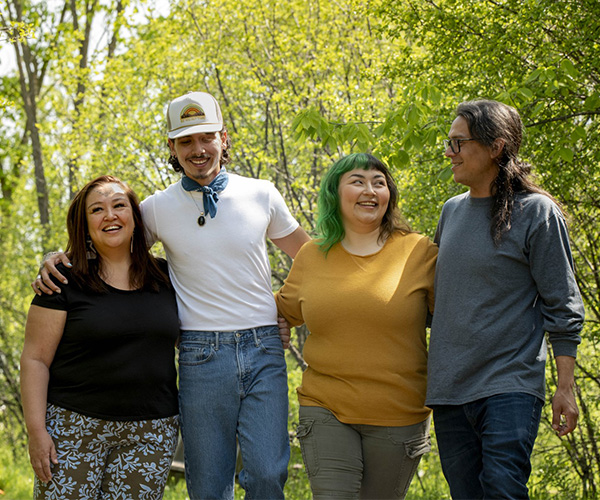
June 21 is the 30th anniversary of National Indigenous Peoples Day
June 17, 2026Image credit: CIRA
This year marks the 30th anniversary of National Indigenous Peoples Day. Held annually on June 21, National Indigenous Peoples Day celebrates the cultures, traditions and contributions of First Nations, Métis and Inuit peoples.
The day was originally declared as National Aboriginal Day by Governor General Roméo LeBlanc in 1996, following years of consultation and calls for the creation of such a day by the Assembly of First Nations and other Indigenous groups. It was renamed National Indigenous Peoples Day in 2017. June 21 was chosen because it is the summer solstice, a day of spiritual and cultural significance for many Indigenous peoples.
Every year, Indigenous communities hold events to celebrate and share their diverse cultures. You can find a list of public gatherings in British Columbia at Indigenous Tourism BC.
Cultural connections, like those celebrated during the summer solstice, can promote the wellbeing of Indigenous children and youth. For example, research suggests that strengthening these connections can help lower rates of suicide for Indigenous young people. For more information, see Vol. 17, No. 1 of the Children’s Mental Health Research Quarterly.

Pride Month highlights the power of supportive communities
June 1, 2026Photo credit: Pexels
June is Pride Month. Around the world during Pride, communities gather to celebrate LGBTQ+ people and their achievements. These gatherings also protest ongoing anti-LGBTQ+ discrimination and advocate for equality, freedom and safety for all.
Today’s Pride gatherings trace their history back to the Stonewall Uprising of 1969, a multi-day series of demonstrations sparked by a police raid on a popular gay bar in New York City. The first Pride marches were held one year later, in 1970.
Now, 56 years later, Pride events around the world continue to bring LGBTQ+ community members and allies together to support one another — including LGBTQ+ youth.
LGBTQ+ youth often face serious social inequities, including discrimination. But research has shown that being part of supportive communities can help protect these youth against negative mental health outcomes.
For example, LGBTQ+ youth are less likely to attempt suicide if they live in communities generally supportive of their rights, such as those with greater protections for same-sex couples and with schools that have supportive policies. Additionally, LGBTQ+ young people who feel supported by their parents and schools have better mental health outcomes.
This highlights the importance of addressing discrimination and supporting LGBTQ+ youth, for everyone’s benefit. For more information, see Volume 11, No. 2 of the Children’s Mental Health Research Quarterly.

Adverse childhood experiences increase opioid misuse risk
May 18, 2026Photo credit: Pexels
A large study of Americans aged 18 and older pointed to the role of adverse childhood experiences in the development of opioid use disorder. Researchers surveyed more than 36,000 individuals who were representative of the US population, asking about their experiences with 10 different forms of early adversity, such as childhood physical abuse, and their prescription opioid use as adolescents and adults. They found that early adverse experiences significantly increased the odds for misusing prescription opioids at or before age 17 and the odds for ever being diagnosed with opioid use disorder. And opioid risk rose as the number of adversities rose. Notably, most of these adversities were avoidable.
For more information, see Vol. 18, No. 3 of the Children’s Mental Health Research Quarterly.